About 7 minutes to read · Updated November 13, 2026
On November 5, 2026, Amazon announced its 2027 US fee changes. Two dates matter most: January 15, 2027 for fulfillment fees and February 1, 2027 for storage and inventory fees.
Here is what changes, what stays the same, and what to do before each date.
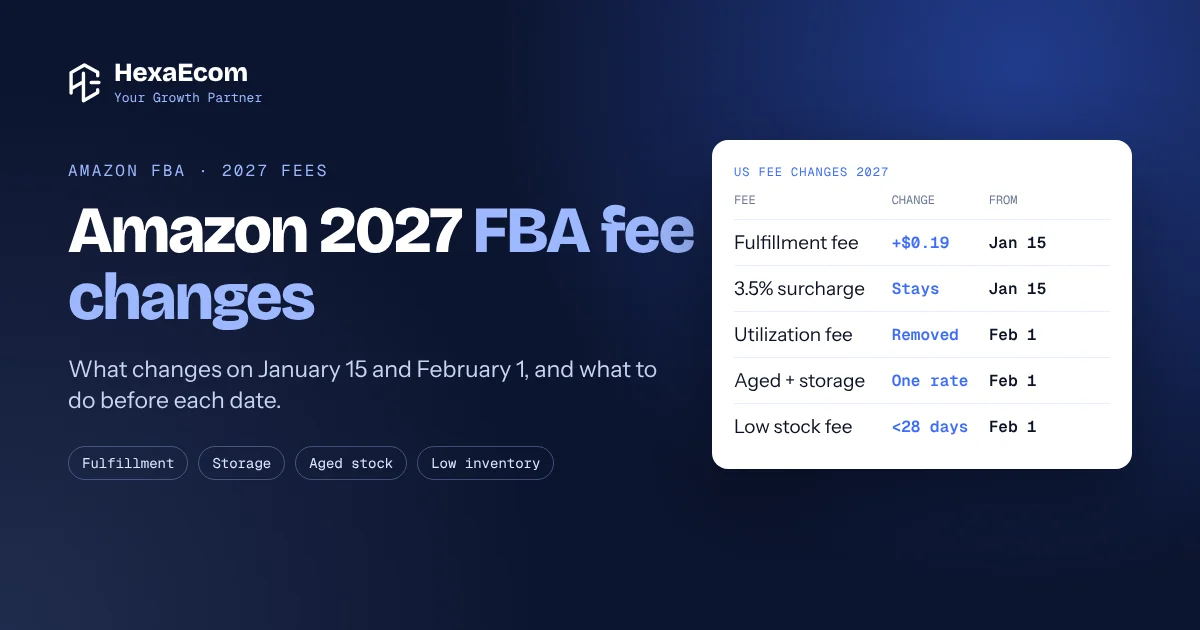
Amazon 2027 FBA fee changes at a glance
| Date | What changes | What it means for you |
|---|---|---|
| Until Jan 14, 2027 | Holiday peak fulfillment fees | Peak fees run until the new rates start. |
| Jan 15, 2027 | FBA fulfillment fees rise by $0.19 per unit on average | About 0.8% of the average selling price. Some items go up, some go down, by size and price. |
| Jan 15, 2027 | The 3.5% fuel and logistics surcharge stays | It is still added on top of the fulfillment fee. |
| Feb 1, 2027 | The storage utilization surcharge is removed | Easier to stock up before big sales events. |
| Feb 1, 2027 | The aged inventory surcharge is merged into one age-based monthly storage rate | Stock that sells within six months pays the same or less. Aged stock pays more. |
| Feb 1, 2027 | The low-inventory-level fee only applies below 28 days of supply | Fewer charges after sudden sales spikes or at the end of a season. |
January 15, 2027: fulfillment fees go up
Amazon says FBA fulfillment fees rise by $0.19 per unit on average, about 0.8% of the average selling price. That is an average, not a fixed increase: some products pay more, some pay less, depending on size tier and price.
The change differs by price band: products under $10, from $10 to $50, and over $50 each have their own schedule. Check the new rate card for each of your products before you change prices.
Low-price FBA: products under $10 in five categories (Automotive and Powersports, Compact Appliances, Musical Instruments and AV Production, Media, and Computers) lose the low-price FBA rates and move to the $10 to $50 schedule.
The 3.5% fuel and logistics surcharge that started in April 2026 stays in place, and it is worked out on the new, higher fulfillment fee. Our guide to FBA surcharges in 2026 explains how it works.
Example: a product with a $5.00 fulfillment fee that goes up by $0.19 pays $5.19, plus 3.5% on top. At 5,000 units a month, the $0.19 adds about $950 a month. With the 3.5% surcharge on the extra $0.19, it’s about $983 a month.
February 1, 2027: storage fees change
The storage utilization surcharge is removed
Until now, sellers who held a lot of stock compared with their sales paid an extra storage charge. From February 1, that surcharge is gone, so stocking up before a big sales event costs less.
Aged inventory moves into one age-based storage rate
The separate aged inventory surcharge is removed and merged with the monthly storage fee into one rate that depends on how long stock has been in Amazon’s warehouses. Amazon says stock that sells within six months pays the same or less, and aged stock pays more: the older the stock, the higher the rate. Old stock does not get cheaper: the cost just moves into one fee.
The low-inventory-level fee only applies below 28 days of supply
The fee will only apply when your stock falls below 28 days of supply, based on what actually shipped in the four weeks before and after the check. Products with a sudden sales spike or at the end of a season should be charged less often.
What to do before January 15
- Check the new rate card in Seller Central for your size tiers.
- Recheck your profit per product with the new fulfillment fee and the 3.5% surcharge.
- Update your prices and PPC targets. A higher fee lowers the ACoS you can afford.
- Check your product dimensions and weight. A wrong measurement can put a product in a more expensive size tier.
What to do before February 1
- Open your Inventory Age report and plan for stock that is close to six months old.
- Clear slow stock with a deal, a lower price or a removal order before it costs more.
- Before a big sales event, forecast demand first. The utilization surcharge is gone, but stock that doesn’t sell within six months costs more, so compare the new storage rates before you send extra.
- Plan replenishment for your best sellers. If stock falls below 28 days of supply, judged on shipments in the four weeks before and after the check, the low-inventory-level fee can apply.
Other 2027 changes to know
- Buy X, Get Y promotions: from January 15, 2027 these promotions are reported to carry a fee for each promotion that runs: $5 upfront plus 2% of the final price, capped at $2,000.
- Multi-Channel Fulfillment and Buy with Prime: standard-speed fees rise by an average of 3.5%. Expedited fees stay about the same on average.
- Amazon Warehousing and Distribution (AWD): AWD and Multi-Channel Distribution fees also change. Check the details in Seller Central if you use them.
Check your own numbers
Amazon added a Fee Change Comparison dashboard in Profit Analytics in Seller Central. It shows how the 2027 fees affect each of your products. You can also test single products in Amazon’s Revenue Calculator.
How HexaEcom helps
Amazon FBA private label brands are our core work. As part of Amazon account management we check fees, inventory age and stock levels, and set PPC targets around your real margins.
Want to know what the 2027 fees mean for your margins?
We’ll review your Amazon fees, stock and ads, and show you where to act before January 15. It’s free.
Questions about the 2027 fee changes
When do Amazon’s 2027 FBA fees change?
FBA fulfillment fees change on January 15, 2027. Storage, aged inventory and low-inventory-level fee changes start on February 1, 2027.
Is the 3.5% fuel and logistics surcharge staying?
Yes. Amazon is keeping the 3.5% surcharge, and it applies to the new fulfillment fees.
Is the aged inventory surcharge going away?
As a separate fee, yes. From February 1, 2027 it is merged with monthly storage into one rate based on inventory age, so aged stock still costs more.
When does the low-inventory-level fee apply?
From February 1, 2027 it applies only when stock falls below 28 days of supply, based on actual shipments in the four weeks before and after the assessment date.
Amazon fees and rules change often. This article summarizes the US fee changes Amazon announced on November 5, 2026, as of November 13, 2026. Check the current rate card in Seller Central before you make pricing or stock decisions. HexaEcom is an independent agency and is not affiliated with Amazon.
Sources
- Amazon Selling Partners: Update to US referral and Fulfillment by Amazon fees for 2027
- Chain Store Age: Amazon to increase, streamline shipping and logistics fees in 2027
- PPC Land: Amazon sellers face average $0.19 FBA fee rise from January 15, 2027
- EcomCrew: Amazon’s 2027 fee math doesn’t stop at 19 cents
- Novadata: Amazon 2027 FBA fee changes